A Quick Face Analysis Before You Sit for a LinkedIn Headshot
By Hannah Cole · November 2026
The last time I booked a headshot, I walked in with one vague brief: "something that looks like me, but sharper." The photographer was good. I still picked the wrong frame afterwards — a three-quarter angle that looked fine on a phone and slightly off on a LinkedIn crop.
Before the next session I wanted a short, cheap rehearsal: one clear photo, a face-shape read, and a rough sense of which angles were doing the picture favours. I used a free face analysis tool for that rehearsal, and I treated the score as a hint about the photo, not a verdict on anyone's face.
What I ran at home, the night before
Face Analysis AI looks at one to five clear, front-facing photos of the same person. The face shape analysis and the photo rating are free. You get a shape estimate (oval, round, square, heart and so on) and a light, 1–10 attractiveness-style score for the picture. A personalized improvement report is optional and paid ($17.49). I stayed on the free side for this dry run.
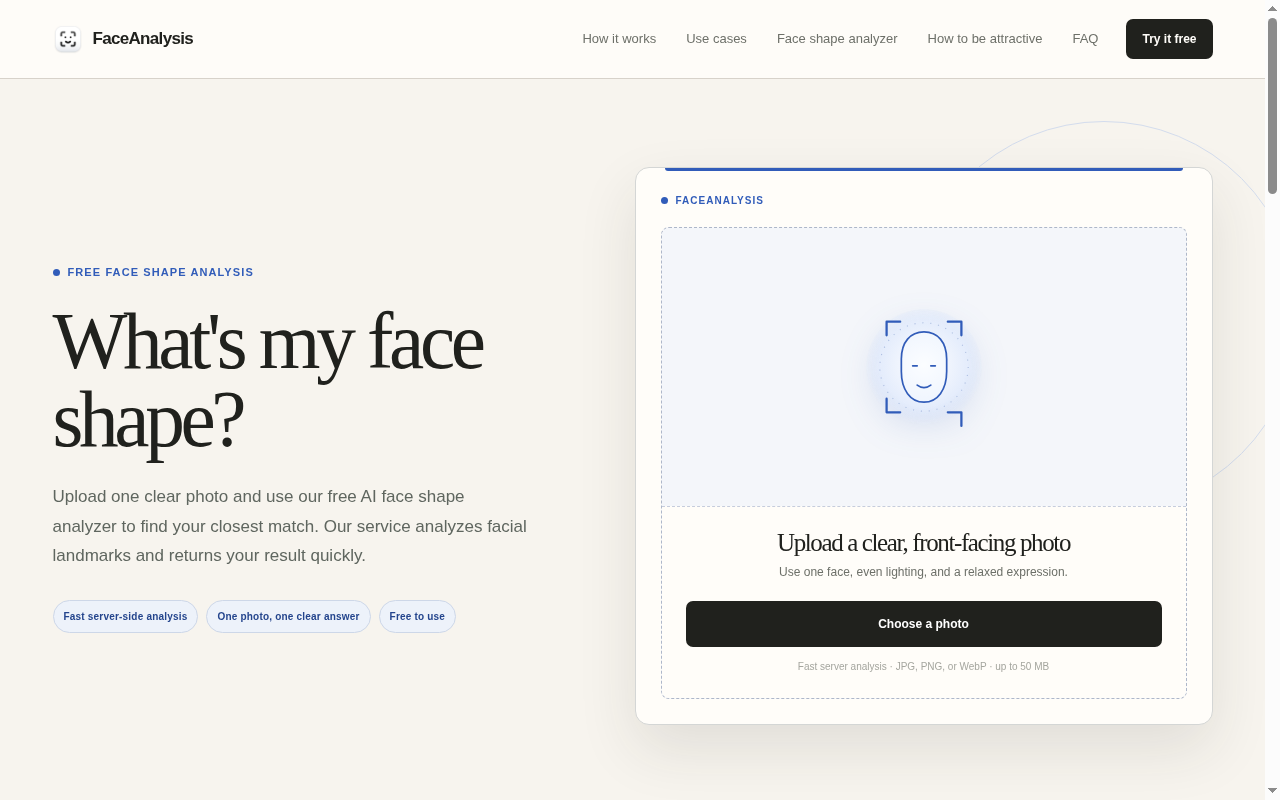
I took five shots against a plain wall: straight-on, slight left, slight right, a little higher, a little lower. Same shirt I planned to wear. Daylight from a window, no heavy filter. Then I uploaded them and compared the notes, not just the number.
What I actually took away
- The straight-on frame was the most stable in a tight crop, which is how LinkedIn will show it.
- The lower angle made my jaw look heavier in the tool's notes and, when I squinted at the files, in the photos too.
- The face-shape result gave me something concrete to tell the photographer — "keep the camera closer to eye level, leave a little space above the hair" — instead of "make me look professional."
The attractiveness test score moved a point or two between almost identical frames. That was useful as a reminder that lighting and angle swing the number, and useless as a personality test. I wrote the highest and lowest scores down, then ignored them in the studio and used the shape and angle notes instead.
What I told the photographer (and what I didn't)
I sent a short note: preferred angle, the shirt, and that I needed a crop that still worked as a small circle. I did not send the scores. A photographer does not need a 7.4 from a model to do their job, and I didn't want the session steered by a number that changes when the window light moves.
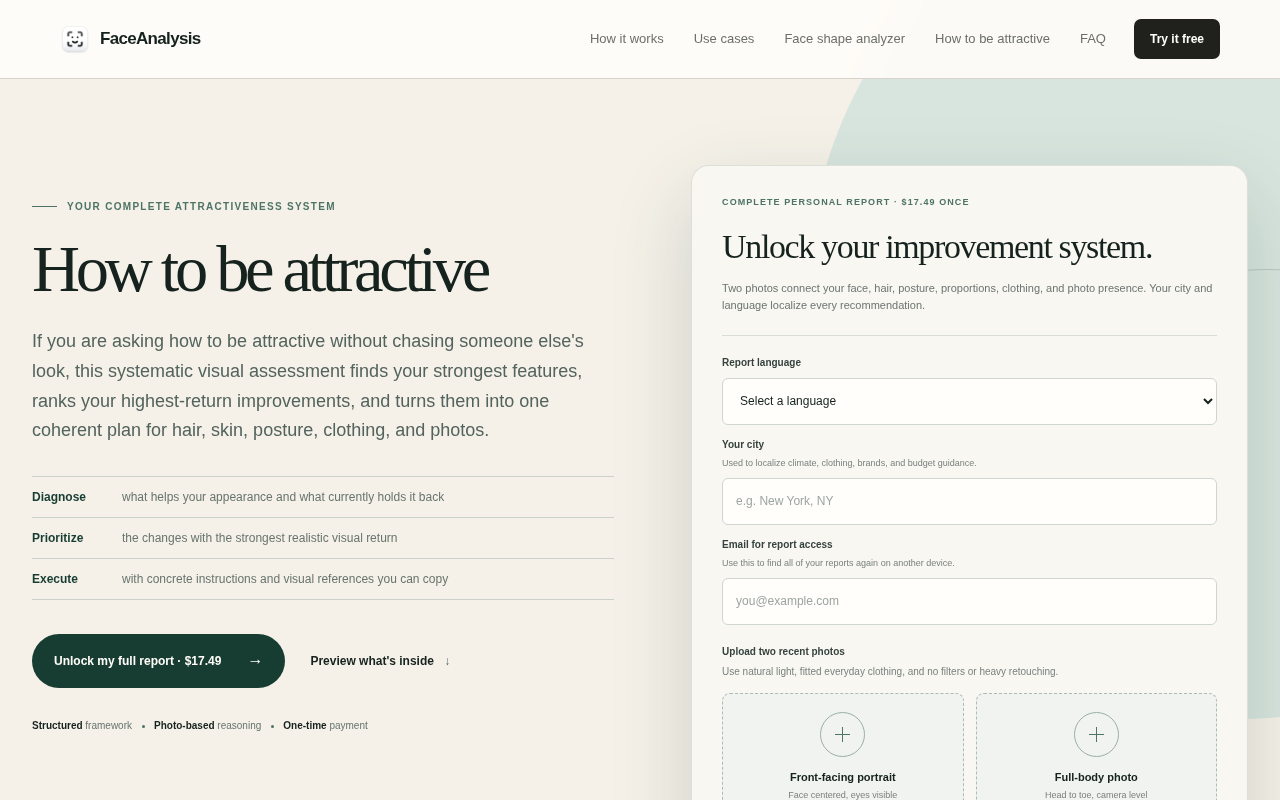
The paid report might be worthwhile if you want written suggestions for hair, glasses or grooming. I already had a haircut I liked, so I skipped it.
Limits worth saying out loud
This is a photo tool, not a clinical assessment. Results depend on lighting, lens, and how front-facing the picture is. It is not a substitute for a stylist, and a single score should never decide whether you like your own face. I also wouldn't use someone else's photo without their say-so.
Related reading
If you want more context on what the score is actually measuring, there is a plain-language explanation of the attractiveness test and a short Telegraph overview of AI face analysis.
After the session
I still let the photographer edit. The rehearsal didn't replace the shoot; it just meant I wasn't choosing between twelve similar frames with no language for why one felt better. The picture I use now is a straight-on, eye-level crop. The tool didn't take it. It did help me ask for it.
— Hannah Cole